
It is the relationships surrounding a child that shape the quality of their life.
When a child’s environment or relationships feel unpredictable or unresponsive, the body tries to create a sense of safety. It adapts. What looks like “behaviour” may be the child’s way of seeking orientation, connection or protection.
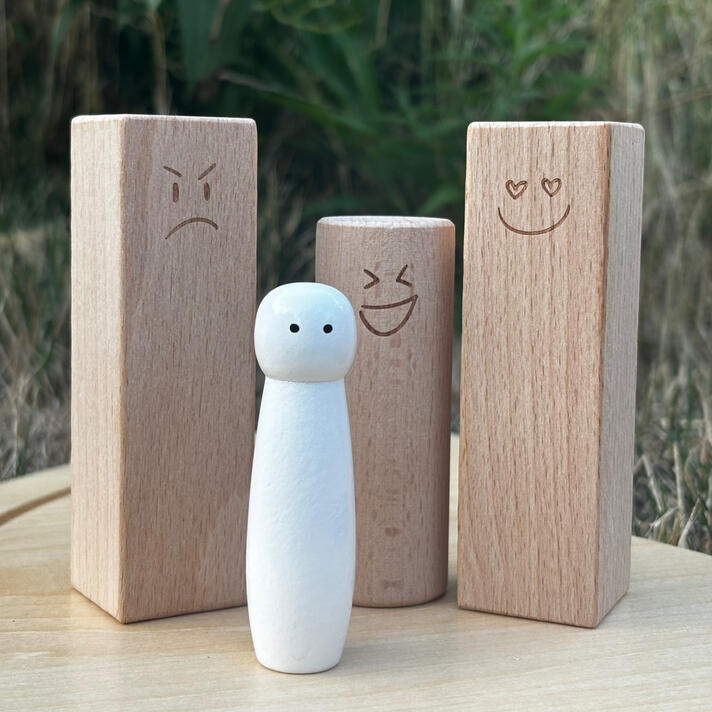
Individual Guidance
Children learn from what we embody — from how we relate to ourselves and navigate life. Long before they understand our words, they experience our presence.
That is why parenting does not begin with the child.It begins with you.What has been passed down to you? How does your body respond? How does your mind try to protect you? What does your soul need? What is seeking expression? And who are you when you are no longer acting from the past or out of fear of the future?In a society that continually invites us to look outward, staying connected to ourselves becomes essential. It creates space to come closer to who you truly are — and, in turn, to meet your child with greater authenticity.
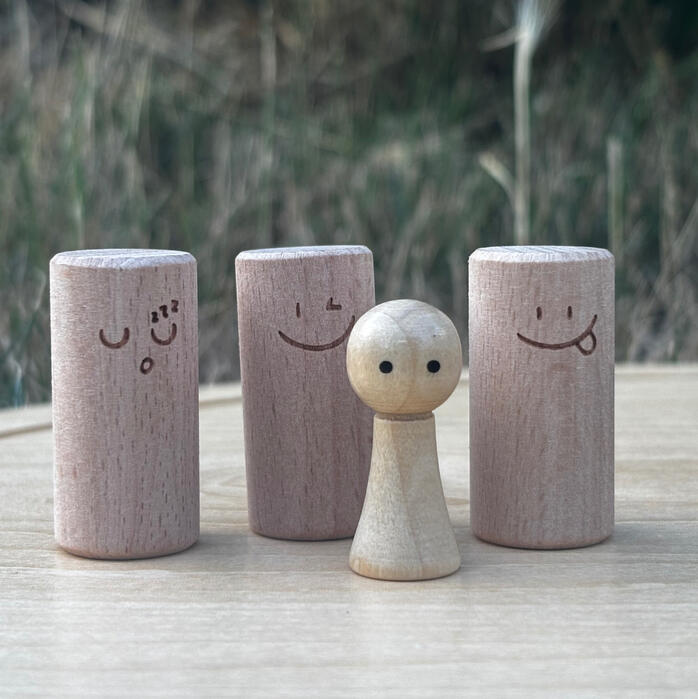
Heilpädagogische Child Accompaniment
Before a child can tell their story, they have already experienced so much. Even in the womb, their body begins to take in information about the environment they will be born into. They cannot communicate these experiences through words, but express them through play, movement and the way they relate to others.Through expressive arts, within a supportive and relationship-centred approach, children can have safe somatic experiences. Their nervous system can begin to sense: I am not the label placed on me. I do not have to live in fear. I am allowed to feel and express myself. I am a creative force. I am allowed to trust.That is why we do not ask: What impairment or behavioural difficulty is this child displaying? Instead, we explore: What is already alive within this child? How can we support their body in developing a sense of connection?
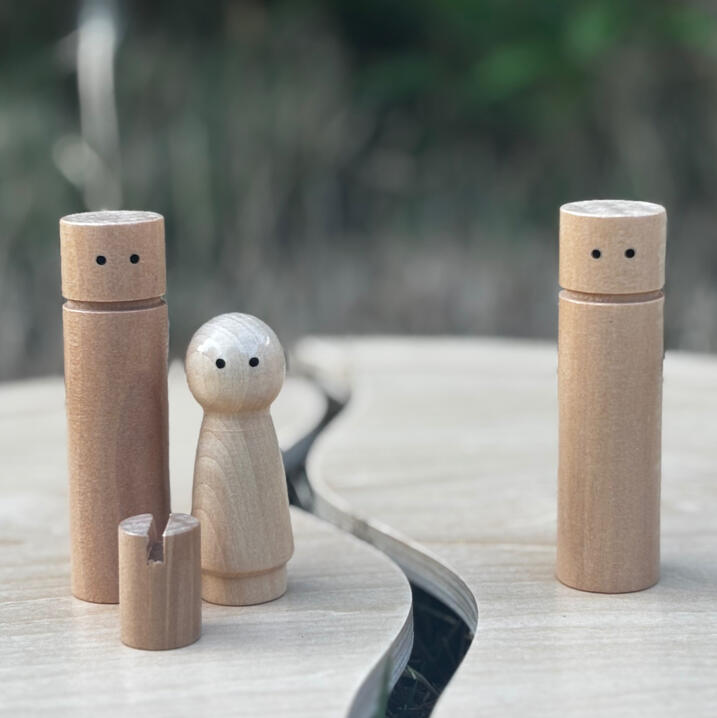
Couples and Parents Guidance
Every relationship dances between the desire for closeness and the need for independence. Staying connected while remaining free — holding both at once is the real art.
Within this tension, many stories meet: the way you see yourselves, the relationships that have shaped you, the roles you inhabit, and the people you still want to become together.
When you recognise the patterns behind recurring conflicts and meet crises with curiosity rather than defensiveness, a relationship can emerge that is not merely endured, but grows alongside you.
Through you, your child experiences what relationships can mean: emotional responsibility, compassion, honest engagement, and the knowledge that repair can happen even after a rupture.
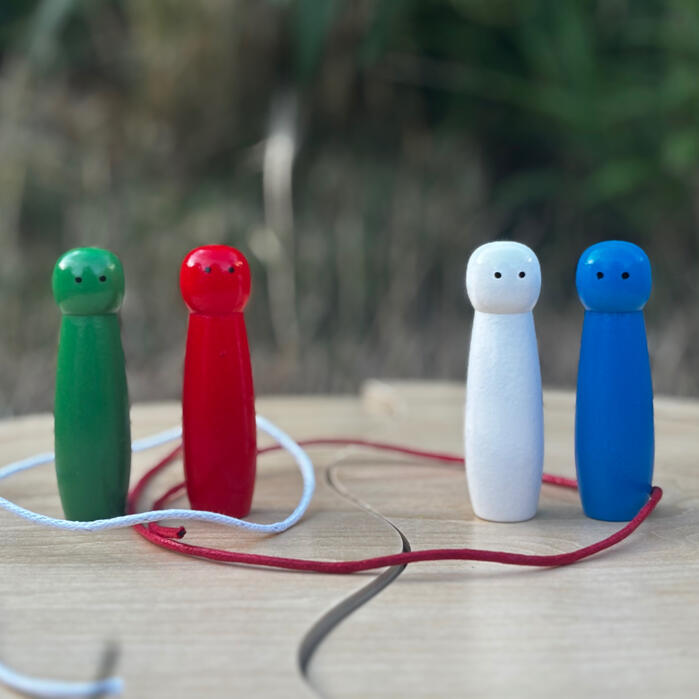
Professionals Guidance
Working day after day in conditions where the urgent increasingly takes precedence over the needs of families and childhood takes courage. Overwhelm, exhaustion and pressure to adapt can overshadow wisdom, experience and motivation.
When a childcare centre loses one educator after another, when parents come into conflict with the team, when children show increasing signs of distress, or when educators and leadership begin to see each other as adversaries, it is worth asking: How are we shaping our relationships and communication with one another?
What appears to be an individual problem may reflect what is happening within the wider system.
The capacity to act requires genuine connection. Children may not remember every activity you offered, but they will remember how they felt with you, within themselves and in their environment.
What do we work on?




"Trauma changes our expectations of ourselves, other people, and the world. Healing does not come simply from recalling what happened. It comes through new experiences that contradict what trauma taught us—experiences of safety instead of danger, connection instead of isolation, and compassion instead of shame. It is these repeated experiences that gradually reshape the nervous system and create the conditions for lasting change."
- Dr. Janina Fisher, Clinical Psychologist and Trauma Expert
Where do we start?
Free Call Booking
We get to know each other
We can begin
The First Step
Clarifying your needs (Parents)
1 x 60 min.
Together, we listen to body, soul and mind, recognising the parts of you that long to be heard, seen and acknowledged. This is where the journey begins.
€100
Clarifying goals (Childcare Centre Leadership)
1 x 60 min.
Your intention as a leader sets change in motion. Together, we listen to the situation and make space for what is calling for change. From here, the way forward begins to emerge.
€100
The process
Individual session
1 x 90 min.
A new experience of connection, at your own pace and with space for whatever needs attention right now.
1:1 Support — €140Couples / Co-parenting Support — €160
Parent-Child Session
1 x 90 min.
You and your child discover new ways to connect through the body, art and music — playfully, creatively and beyond words.
€160
Flexible 5-session package
5 x 90 min.
Used where the relationship needs attention most — sometimes for you, sometimes for you as a couple, sometimes for your child. The order of sessions unfolds according to what emerges.
€750
10-session family support package
10 x 90 min.
When several relationships need attention at once and multiple family members are involved. This creates space for the whole family system to begin moving towards change.
€1,400
Half-day team workshop
1 x 3,5 Stunden
A structured workshop combining somatic and systemic approaches to deepen awareness, encourage reflection and translate insights into practical experiences for everyday work.
€750
Full-day team workshop
1 x 6 stunden
Tailored to your team’s current situation and needs.
The work unfolds through shared experience. Somatic and systemic practices emerge in real time from what becomes visible and tangible within the team.
This creates space for deeper awareness, new perspectives, connection and the resources the team already holds.
€1,400
“The critical issue is reciprocity: being truly heard and seen by the people around us, feeling that we are held in someone else’s mind and heart. For our physiology to calm down, heal, and grow, we need a visceral feeling of safety.”
— Bessel van der Kolk, The Body Keeps the Score (2014)
Voices from Practice
★★★★★
"I felt truly taken seriously and supported with appreciation and respect. I found it easy to openly address even difficult situations, as she listened attentively and created an atmosphere of trust. I especially appreciated her ability to open up new perspectives on challenging situations. I was able to organize my thoughts more clearly and recognize resources and possible ways of taking action that I had not considered before."
Professional Support, German
★★★★★
"I was afraid to talk about personal topics. However, everything felt natural. The sessions helped organise the flow of my thoughts. Before, my mind often felt chaotic, and I would overlook or ignore important thoughts. Now, everything seems much clearer. Couples Counselling helped my partner and I discuss topics we had been avoiding for months. It created a safe space where we could openly express ourselves, better understand each other's perspectives, and improve our communication."
Couples Support, English
★★★★★
"Keila is one of those rare people with whom you grow both professionally and personally.
I'm especially impressed by her ability to analyze complex situations with real nuance and bring valuable insights from her systemic perspective — insights that are often overlooked — as well as her patience, her appreciative attitude, and her extraordinary ability to remain impartial even in challenging situations. She meets people with genuine openness and combines professional expertise with an authentic, warm manner.
Every professional exchange with her broadens your own perspective and inspires you to keep developing your own work."
Professional Support, German
★★★★★
"I'm so grateful for her. She helps me reconnect with myself and better understand what's really going on in my head and my heart. She creates such a safe, supportive space that I always leave with more clarity, a fresh perspective, and a deeper understanding of myself. Her support has truly made a difference in my life."
Individual Support, Spanish
★★★★★
"Keila knows very well how to ask the right questions at the right moments, allowing topics to be explored not only on the surface but at their core. She helps people gain new perspectives and, above all, not lose their self-love — or to rediscover it."
Individual Support, German
★★★★★
"My conversations with Keila helped me a great deal. Her shift in perspective between my children and me helped me understand them better. She gave me valuable tips I could actually put into practice."
Individual Support, German
Ultimately, it’s about connection — with ourselves, with others, and with life.
FAQ
How do adverse relational experiences shape our lives?
Even before and immediately after birth, we are shaped by conditions, bodily signals and experiences that influence our development.Traumatic stress can therefore arise not only from what happens to us, but also from the ongoing experience of something essential being missing in our relationships and connection, and of that connection being impossible to restore.When a child’s relationships are unpredictable or unresponsive, they adapt to cope. They may become very quiet and compliant, react loudly or angrily, withdraw, or constantly try to anticipate other people’s moods and expectations.What was originally a valuable attempt by the nervous system to preserve safety and connection can continue as a familiar pattern later in life — for example, as withdrawal, fear of losing control, or a constant search for intense stimulation.
Why do we look beyond the child to the relationships surrounding them?
A child develops within a network of relationships. That is why it's worth asking not merely:“How do we make this behaviour stop?”but specially:“What might this behaviour be showing us?”
“What does the child need?”
“What do the adults need?”
“What is happening between us right now?”This is not about blame. Every person brings their own experiences, needs and protective strategies into relationships.When adults gain greater support, orientation and flexibility in how they respond, more space can open up for a child to experience safety and development.
Why somatic work?
Our earliest experiences are stored in implicit memory. They don’t stay with us as a story we can tell, but as sensations in the body, impulses, tension, or a mood that quietly follows us around. These memories carry no date, so they don’t feel like the past. They feel like now.That’s why words and insight alone can only take us so far. What was never stored in words can’t be fully changed through words. Implicit patterns begin to shift when the body, here and now, lives through something new that contradicts the old: feeling held instead of abandoned, or finding calm where there used to be alarm. Somatic work, work that starts from the body and from experience, creates space for exactly this. Through art, music, and movement, we can have these experiences without needing words. That’s why it complements any therapeutic approach: it reaches the level where implicit experience lives, where held tension can release and something new can arise, with more room to feel, new ways of responding, and a deeper connection to the present.
How do our families shape the way we experience and express emotions?
Within our families, children learn how emotions are experienced, understood and expressed. Their relationships, past experiences and the responses of adults shape how they make sense of what happens within and around them. By observing others, they gradually learn to recognise, name and respond to emotions. They also discover which emotions are welcomed and which they may need to hide to preserve connection and belonging.These patterns shape how we relate to ourselves and others. By becoming aware of what we have learned and developing our emotional skills, we can create new possibilities for expression and connection, reduce relational stress and support emotional and physical well-being across generations.
How do presence, body awareness and relationships support resilience?
Resilience develops through the interplay between our personal resources, our relationships and the environments we live in. Body awareness helps us recognise our emotions, needs and responses to stress, while presence allows us to notice our experience in the here and now and create space for more conscious responses.From a systemic perspective, our ability to navigate difficulties is also shaped by the relationships and social contexts we are part of. Supportive connections can provide belonging, emotional and practical resources, and new perspectives on challenging situations.Resilience is therefore not simply an individual strength, but a dynamic process shaped by self-awareness, relationships and the resources available to us.
What does systemic counseling and curative education look like in practice?
We begin with what brings you to me: a situation in your everyday life, a recurring dynamic in your relationships, or emotions that are difficult to understand or navigate. With curiosity and compassion, we explore different perspectives, recognise patterns and discover possibilities that may not have been visible before.Alongside this process, I guide you in exploring your experience through body awareness, music, art and movement. These forms of expression give the body space to process and integrate experiences that cannot—or do not need to—be put into words.Together, we build on the resources you already have and explore what could support change in your everyday life.The aim is not to change who you are, but to help you reconnect with yourself and your family with greater awareness and freedom, strengthen your capacity to act, and discover new ways of relating to one another.
Over 10 years of experience supporting multilingual and intercultural relationships in Peru, China and Germany (English, Spanish, Chinese, Portuguese, German)
Over 10 years of experience in music, art, and somatic expression
Diploma in Translation & Interpreting — Universidad del Pacífico (Lima)
B.A. in Holistic Education — Alanus University of Arts and Social Sciences
Further training in couples and systemic counseling — BTB Institute for Therapeutic Professions
Member of the Professional Association for Special Education (BHP) e.V.
Member of the German Society for Health Promotion and Prevention e.V.
Focus areas: Multicultural & intercultural relationships · Multilingual (DE · ES · EN · PT) · Human development & self-actualisation · Trauma-informed & resource-oriented · Holistic child accompaniment · Online & hybrid
IMPRESSUM
Keila Ayala Vasquez
Freiberufliche Heilpädagogin, Systemische und PaarberaterinLauerbachgasse 1
67346 SpeyerE-Mail: [email protected]
Telefon: +49 17680458518
Steuernummer: 24 / 004 / 43782
Zuständiges Finanzamt: Finanzamt SpeyerHinweis gemäß § 19 UStG: Als Kleinunternehmerin wird keine Umsatzsteuer berechnet.Information zur Verbraucherstreitbeilegung nach § 36 VSBG:
Ich nehme nicht an einem Streitbeilegungsverfahren vor einer Verbraucherschlichtungsstelle teil und bin hierzu auch nicht verpflichtet.
PRIVACY POLICY
Controller responsible for data processing:Keila Ayala Vasquez
Lauerbachgasse 1
67346 Speyer
E-Mail: [email protected]
General
Protecting your personal data is important to me. I process your data exclusively on the basis of the legal provisions of the GDPR.
Contact by Email
When you contact me by email, the data you provide — your name, your email address, and the content of your message — will be stored and used solely for the purpose of handling your enquiry. I will not share this data without your consent. The legal basis is Art. 6 para. 1 lit. b GDPR.
Hosting
This website is hosted via Carrd. When you visit the website, technical access data (e.g. IP address, browser type, time of access) is processed as part of the hosting operation. The provider is Carrd Co., USA. Data transfer to the USA takes place on the basis of the European Commission's standard contractual clauses. For more information, please refer to Carrd's privacy policy: carrd.co/privacyCookies
This website does not use tracking or marketing cookies. Technically necessary cookies may be set by the hosting provider Carrd.
Your RightsYou have the right to access, rectify, delete, and restrict the processing of your personal data, as well as the right to data portability. You can contact me at any time by email: [email protected]
You also have the right to lodge a complaint with the competent data protection authority. In Rhineland-Palatinate, this is the State Commissioner for Data Protection and Freedom of Information Rhineland-Palatinate.
Withdrawal of ConsentIf you have given me your consent to process your personal data, you may withdraw it at any time without giving reasons. The lawfulness of processing carried out prior to withdrawal remains unaffected.